

Key Highlights
- Bucks County business owners are facing significant economic uncertainty and rising operating costs in 2026.
- Inflation and shifting consumer spending habits remain top challenges, impacting cash flow and business strategy.
- Hiring and retaining qualified talent is a primary concern, with a notable skills gap affecting many local industries.
- Despite challenges, small business owners are showing resilience by focusing on technology and internal growth.
- Peer support and community networking are proving essential for navigating the complex local economy.
- Finding the right professional services is crucial for owners of complex, mid-sized businesses seeking to grow or sell.
The Current State of the PA Small Business Economy in Bucks County
Most Bucks County business owners went into 2026 knowing it wasn’t going to be easy. The NFIB Small Business Economic Trends report paints a familiar picture: cautious owners, tighter margins, and a local economy that keeps asking more than it gives back right now.
Short-term confidence has ticked up in some corners of Pennsylvania, but that hasn’t translated into easy long-term planning. The pressures are real, and they’re landing differently depending on what you do and where you sit in Bucks County. A contractor in Warminster is wrestling with different specifics than a restaurant owner in New Hope, but the underlying anxiety is pretty similar across the board. Operating costs are up. The labor pool is still thin. Nobody feels like they have a lot of room for error.
What follows isn’t a comprehensive economic report. It’s a practical look at what’s weighing on local owners right now, based on the data that’s actually out there.
Economic and Regional Trends Impacting Local Businesses in 2026
The Keystone Newsroom’s coverage of Pennsylvania’s small business climate has tracked a consistent theme heading into 2026: business owners are more data-conscious than they used to be, partly out of necessity. When margins get tighter, you start paying closer attention to what’s actually driving cost and what isn’t.
External pressure is a big part of why. Supply chain disruptions that everyone assumed would resolve by now are still causing headaches for businesses that rely on consistent material costs or reliable vendor timelines. According to recent survey data, roughly 36% of small businesses have made adjustments to how they source and procure just to keep costs manageable. That’s not a small shift. It reflects how fundamentally the cost of doing business has changed.
Consumer spending is shifting too. Shoppers are more deliberate. They’re looking for value, and when they don’t feel it clearly, they pull back or shop elsewhere. That dynamic alone is pushing a lot of Bucks County businesses to rethink how they talk about what they offer, not just what they charge for it.
How Inflation and Shifting Consumer Behavior Are Shaping Operations
According to NFIB survey data, 46% of small business owners currently name inflation as their single biggest challenge. That number has held stubbornly high for a while now, and it’s not hard to see why. When your input costs go up across the board, including payroll, utilities, supplies, and freight, cash flow becomes the number you’re watching most closely.
More than half of small businesses, about 55%, have raised prices at least once in the past year to compensate. That’s a reasonable response, but it’s not without risk. Price-sensitive customers notice. Some leave. And in a county where word of mouth still drives a meaningful share of new business, the reputational calculus matters.
The owners handling this best seem to be the ones who’ve gotten specific about their value. Not just raising prices and hoping customers follow, but actively communicating why the experience or product is worth it. Easier said than done, obviously, but it’s the work that’s paying off for local businesses that are holding their customer base steady.

Top Pressures Facing Bucks County Business Owners in 2026
Inflation gets most of the headlines, but it’s rarely the only thing on a Bucks County business owner’s mind. Staffing is arguably just as disruptive, and for some industries, it’s actually worse.
Pennsylvania’s Department of Labor and Industry has documented a persistent skills gap across several local sectors. Finding people isn’t always the hard part anymore. Finding people who are trained and ready to contribute quickly is the harder problem. High turnover compounds it. When you lose someone and have to restart the hiring and training cycle, it drains time and money that most small operations don’t have in surplus.
These pressures don’t exist in isolation, either. A business dealing with supply chain volatility while also managing turnover in a key role while also watching cash flow is dealing with three compounding problems at once. That’s the actual reality for a lot of people running companies in Doylestown, Langhorne, Quakertown, and everywhere in between. Resilience is the word people use, but what they usually mean is they’re figuring it out one week at a time.
Impact of the Pandemic on Local Businesses
The pandemic is technically over, but its fingerprints are still on how Bucks County businesses operate. The KFF health workforce research and other labor market tracking have shown that healthcare costs and workforce disruptions triggered during the pandemic years haven’t fully normalized. Employee retention became a crisis during that period, and for many local employers, it still demands more attention than it did in 2019.
What the pandemic did, beyond the immediate disruption, was force business owners to find each other. Peer networks became a real resource when official channels were slow or overwhelmed. Owners started sharing supplier contacts, talking through staffing strategies, and leaning on local relationships in ways they hadn’t before.
| Post-Pandemic Business Shifts | Description |
|---|---|
| Heightened Focus on Resilience | Owners prioritize flexible business models and contingency plans to withstand future disruptions. |
| Increased Digital Adoption | Businesses continue to use technology for operations, marketing, and customer service. |
| Community and Peer Support | Networking with other local owners has become a key strategy for problem-solving and support. |
That collaborative instinct didn’t go away when things stabilized. If anything, it became a permanent part of how the stronger local businesses operate.
Financial Concerns and Opportunities for Small Businesses
Cash flow is the constant. Even business owners who feel solid on revenue are watching payroll costs, healthcare, and tariff-driven material expenses eat into what used to be predictable margins. The AP’s reporting on labor market conditions has reinforced what local owners already know: compensation expectations have moved, and they’re not moving back.
Tariffs add another unpredictable layer. Businesses that import goods or rely on materials with international components are absorbing cost increases they can’t always pass on cleanly. It makes forward planning genuinely difficult.
Still, there are real opportunities embedded in this environment. Capital investment deductions and other tax provisions are worth a hard look, particularly for businesses considering equipment upgrades or technology investments. For mid-sized companies in Newtown, Bensalem, or Warminster that are thinking about next-stage growth or eventually positioning for a sale, this is a good moment to bring in specialized professional services. Not every business broker or financial advisor is equipped for the complexity involved. The ones who are can make a meaningful difference in how those conversations go.

Predictions for the Future of Business in Bucks County
Artificial intelligence is coming into the picture faster than a lot of small business owners expected. Nearly all of the forward-looking survey data points to AI adoption accelerating through 2026, and the practical applications are already showing up: better analytics, more efficient customer communication, operational shortcuts that used to require a full-time hire.
The skills gap is the other side of that coin. Investing in upskilling existing employees is increasingly the move that separates businesses that are growing from those that are standing still. Pennsylvania’s CareerLink network offers workforce resources that not enough local owners are taking advantage of. Workforce development isn’t just a big-company concern.
The small business index will keep reflecting whatever the macro environment hands us. But in Bucks County, the owners who are navigating this well tend to share a few common traits: they’re honest about their numbers, they’re connected to other local owners, and they’re not trying to figure everything out alone.
How Bucks County Business Owners Are Finding Their People
There’s a reason referral-based networking has held up through every economic cycle. When things get uncertain, who you know matters more than what you know, and the business owners who stay connected tend to navigate rough patches faster than those who don’t.
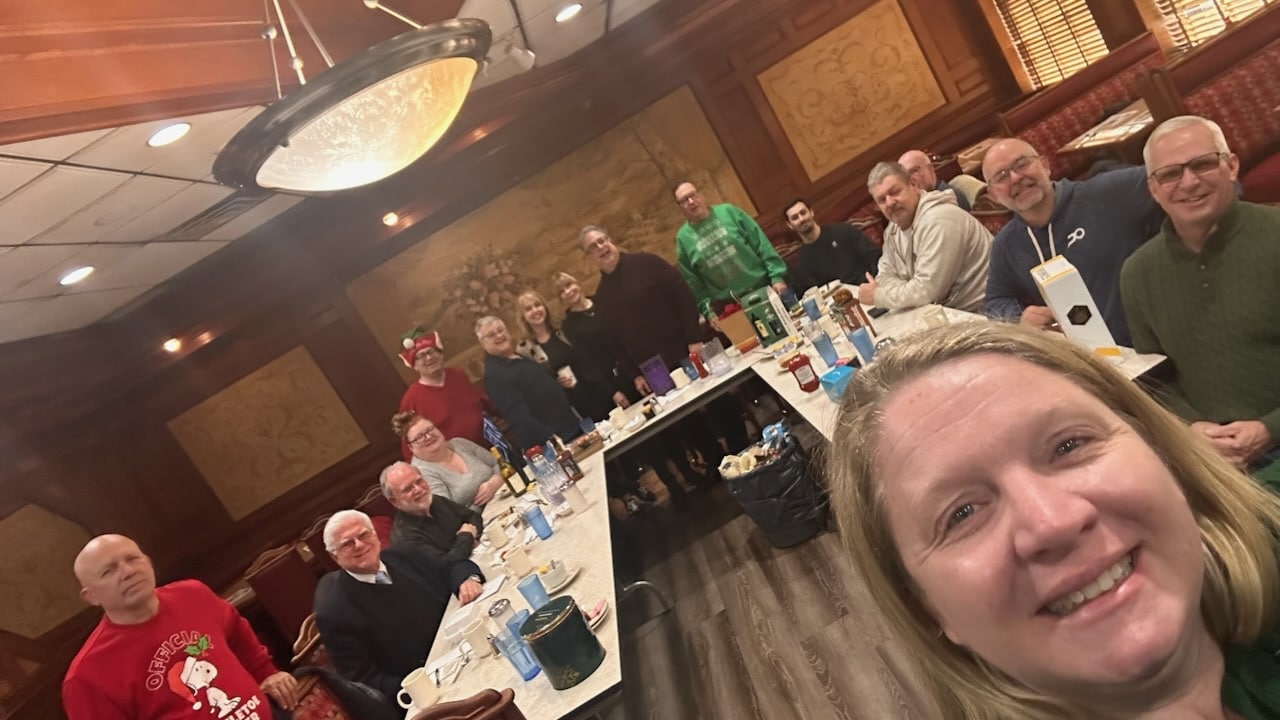
PBNBC is a referral-based networking group that meets every week for breakfast in Bucks County. Membership is one-per-category, meaning no two members compete inside the group. That structure matters more than it might sound. It turns the table into a room full of potential referral partners rather than a room full of people selling the same thing, and it changes how honest the conversations get.
For a lot of members, the value isn’t just the referrals, though those happen regularly. It’s having a standing weekly touchpoint with other local business owners who are dealing with the same inflation pressures, the same staffing frustrations, the same questions about whether now is the right time to invest or hold. That kind of peer support doesn’t show up in any economic index, but it’s real.
If you’ve tried a networking group before and left feeling like you sat through a sales pitch, this is a different experience. Come for the eggs. Stay for the referrals.
There’s a seat at the table with your name on it. Join us for breakfast and see what a Monday morning with PBNBC looks like.
Frequently Asked Questions
How can Bucks County small business owners stay resilient amid uncertainty in 2026?
Staying resilient comes down to cash flow discipline, honest forecasting, and not isolating yourself. Bucks County has real peer networks and local resources worth using. Owners who stay connected to other business owners tend to find answers faster and feel less stuck when things get hard.
What new support systems are available for Bucks County businesses in 2026?
Specialized professional services have grown to meet the needs of mid-sized Bucks County businesses that have outgrown general advisors. These professionals offer guidance on valuation, growth planning, and cost management for businesses that are genuinely complex and need more than a generalist can provide.
What role does community and peer networking play in helping Bucks County businesses thrive?
Peer networking keeps business owners from making decisions in a vacuum. Groups like PBNBC give local owners a regular forum to share what’s working, compare notes on challenges like retention and rising costs, and build the kind of relationships that actually generate referrals. Breakfast and business, consistently.
